
Electric Power Engineering
Lightning Arrester in Pakistan
Lightning Arrester in Pakistan Types, Uses & ESE vs Conventional Complete Guide
A Lightning Arrester is a protective device that intercepts lightning strikes and safely discharges high-voltage current into the ground through an earthing system. It protects buildings, solar plants, and electrical equipment from lightning damage. The two main types are Conventional Lightning Arresters and ESE Orbital Lightning Arresters, where ESE provides wider coverage and higher protection efficiency for industrial and solar installations in Pakistan.
What is a Lightning Arrester?
A Lightning Arrester is an essential safety device used to protect buildings, solar systems, and electrical installations from lightning strikes. When lightning hits a structure, it carries millions of volts of electrical energy. Without a protection system, this energy can damage inverters, solar panels, machinery, and even cause fire hazards. The Lightning Arrester captures the lightning and safely diverts it into the ground through a low-resistance earthing system, ensuring the safety of both infrastructure and human life.
Recommended Applications
Conventional Lightning Arrester: Small homes and low-rise buildings
ESE Orbital Lightning Arrester: Solar systems, factories, commercial buildings, telecom towers
Why Lightning Arresters are Essential in Pakistan
Due to frequent thunderstorms, monsoon seasons, and open-field constructions, lightning strike risks are high in many cities of Pakistan. Lightning protection is especially important for:
Solar power plants
Industrial factories and warehouses
Commercial plazas and high-rise buildings
Hospitals and educational institutes
Telecom towers
Farmhouses and open-area buildings
For cities like Lahore, Karachi, Islamabad, Faisalabad, and Sialkot, lightning protection is considered a critical safety requirement.
Types of Lightning Arresters
Lightning Arresters are mainly divided into two major types:
1. Conventional Lightning Arrester
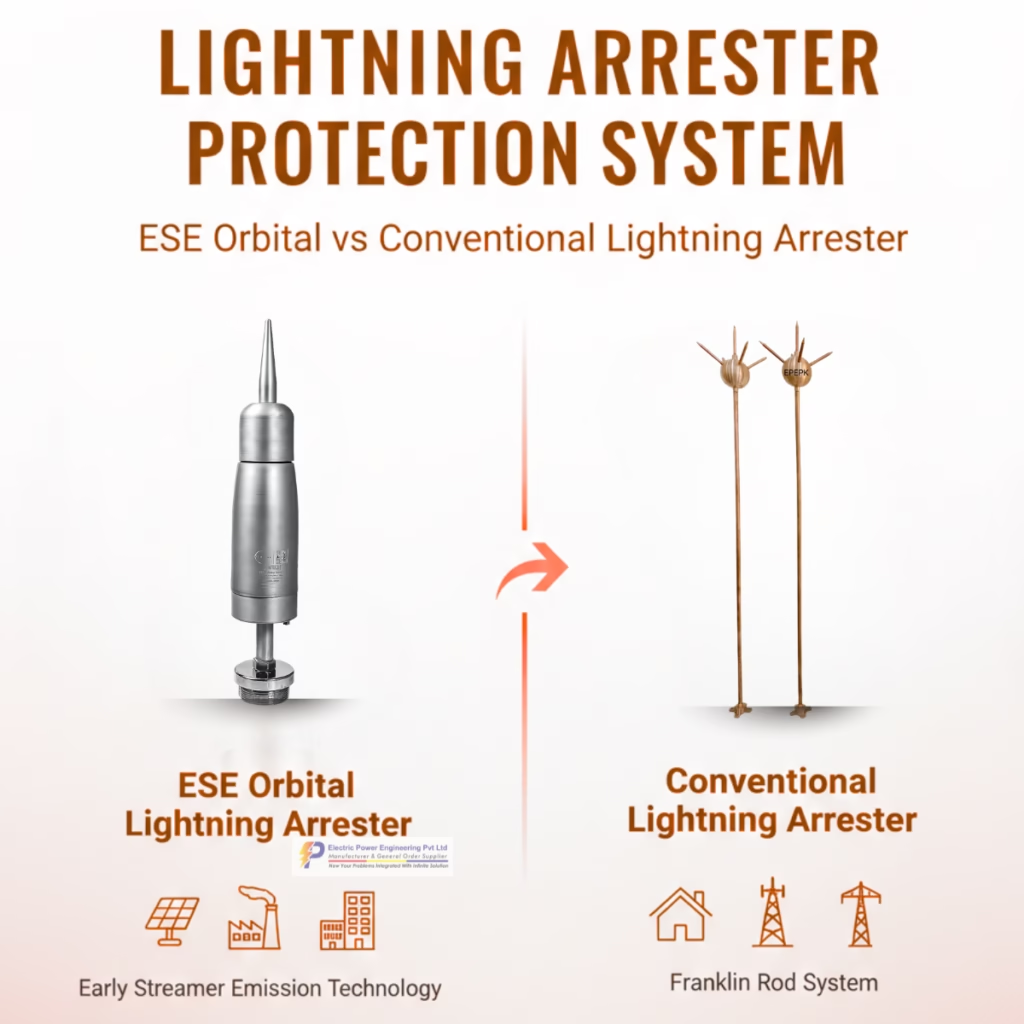
The Conventional Lightning Arrester is the traditional and simplest form of lightning protection. It consists of a metal rod installed at the highest point of a building. When lightning strikes, the rod intercepts it and safely conducts the current to the ground via earthing.
Key Features
Simple metal rod design
Cost-effective solution
Limited protection radius
Suitable for small buildings and houses
ESE Orbital Lightning Arrester (Early Streamer Emission)
The ESE Orbital Lightning Arrester is an advanced lightning protection system that uses Early Streamer Emission technology. It actively attracts lightning earlier than conventional rods and safely channels it into the ground.
Key Features
Advanced early interception technology
Wider protection coverage
Ideal for large buildings, solar plants, and industries
Higher efficiency and reliability
Quick Comparison Between Conventional and ESE Lightning Arrester
Choosing the right lightning protection system depends on coverage area, technology, cost, and application. The table below provides a quick comparison.
| Feature | Conventional | ESE Lightning Arrester |
|---|---|---|
| Technology | Passive | Early Streamer Emission |
| Coverage | Small | 50–100m radius |
| Cost | Low | Higher |
| Best For | Houses | Solar & industries |
For large buildings, solar plants, and industrial projects in Pakistan, ESE lightning arresters provide wider protection and better long-term value.
Conventional Lightning Arrester
Passive metal rod
No electronic or advanced triggering mechanism
ESE Orbital Lightning Arrester
Uses Early Streamer Emission technology
Actively attracts lightning before it strikes the structure
Protection Coverage Radius
Conventional Arrester
Limited coverage area
Protects only the immediate point of installation
ESE Orbital Arrester
Can protect a radius of approximately 50 to 100 meters
Suitable for large solar farms and industrial facilities
Cost vs Long-Term Value
Conventional Arrester
Lower initial cost
Suitable for small-scale installations
ESE Orbital Arrester
Higher cost but long-term safety investment
- Recommended for commercial and industrial projects
Efficiency & Performance
Conventional Arrester
Works only when lightning directly hits the rod
ESE Orbital Arrester
Attracts lightning earlier and diverts it safely
Higher protection efficiency and reliability
Key Components of a Lightning Protection System
According to IEC 62305 lightning protection standards, a complete lightning protection system must include an air termination network (lightning arrester), down conductors, and a low-resistance earthing system to safely dissipate the lightning current into the ground. The standard also defines risk assessment methods, protection levels, and installation guidelines to ensure maximum safety for buildings, industrial facilities, and solar power systems. Implementing lightning protection in compliance with IEC 62305 significantly reduces the chances of structural damage, equipment failure, and fire hazards.
Lightning Arrester Head
Captures the lightning strike at the highest point of the structure.
Down Conductor
Copper or aluminum conductor that safely carries the lightning current downward.
Earthing System
A low-resistance grounding system that dissipates the lightning energy safely into the earth.
Why Lightning Arresters are Crucial for Solar Systems
Solar installations in Pakistan are increasing rapidly. Without lightning protection, the following risks can occur:
Inverter burnout
Solar panel damage
Complete system failure
Fire hazards and safety risks
Therefore, every commercial and industrial solar installation must include a Lightning Arrester along with a proper earthing system.
Electric Power Engineering Trusted Lightning Protection Brand Since 2017
Electric Power Engineering has been providing Lightning Arresters, Earthing Materials, and Electrical Protection Solutions across Pakistan since 2017. Based in Lahore, we offer nationwide delivery, system design guidance, and installation support for industrial, commercial, and solar projects.
Our Specialization
A Lightning Arrester is a critical safety component for protecting buildings, solar systems, and industrial installations from lightning damage. Conventional Lightning Arresters offer a basic and economical solution for small structures, while ESE Orbital Lightning Arresters provide advanced protection with wider coverage and higher efficiency. For large-scale solar plants, industries, and commercial buildings, ESE technology is the most reliable and future-proof solution.
Nationwide Delivery & Support
Based in Lahore Serving All Pakistan
Manufacturer & Supplier Since 2017
Complete Lightning & Earthing Protection Solutions by Electric Power Engineering
Frequently Asked Questions (FAQs)
What is the difference between Lightning Arrester and Earthing?
A Lightning Arrester intercepts lightning strikes, while the earthing system safely dissipates the electrical energy into the ground. Both work together to provide complete lightning protection.
Is a Lightning Arrester necessary for homes?
If a house is located in an open area or has a solar system installed, a lightning arrester is highly recommended for safety.
How much area does an ESE Lightning Arrester cover?
Typically, an ESE lightning arrester can protect an area with a radius of 50 to 100 meters, depending on installation height and model.
Is Lightning Protection mandatory for solar systems?
Yes, lightning protection is strongly recommended, especially for commercial and industrial solar installations to prevent equipment damage and system failure.
Need more help?
Need help? Our team is here to assist you with cable tray selection, pricing, customization, and technical support.
0300-9444-973
0300-9444-907
Need cable tray, conduit or earthing material fast?
Talk to our sales team for factory-direct pricing and same-week dispatch across Pakistan.
Hello! How can we help you?
Any questions related to Lightning Arrester in Pakistan Types, Uses & ESE vs Conventional Guide?
WhatsApp Us
Sales Engineer |MuhammadFaizan
WhatsApp us